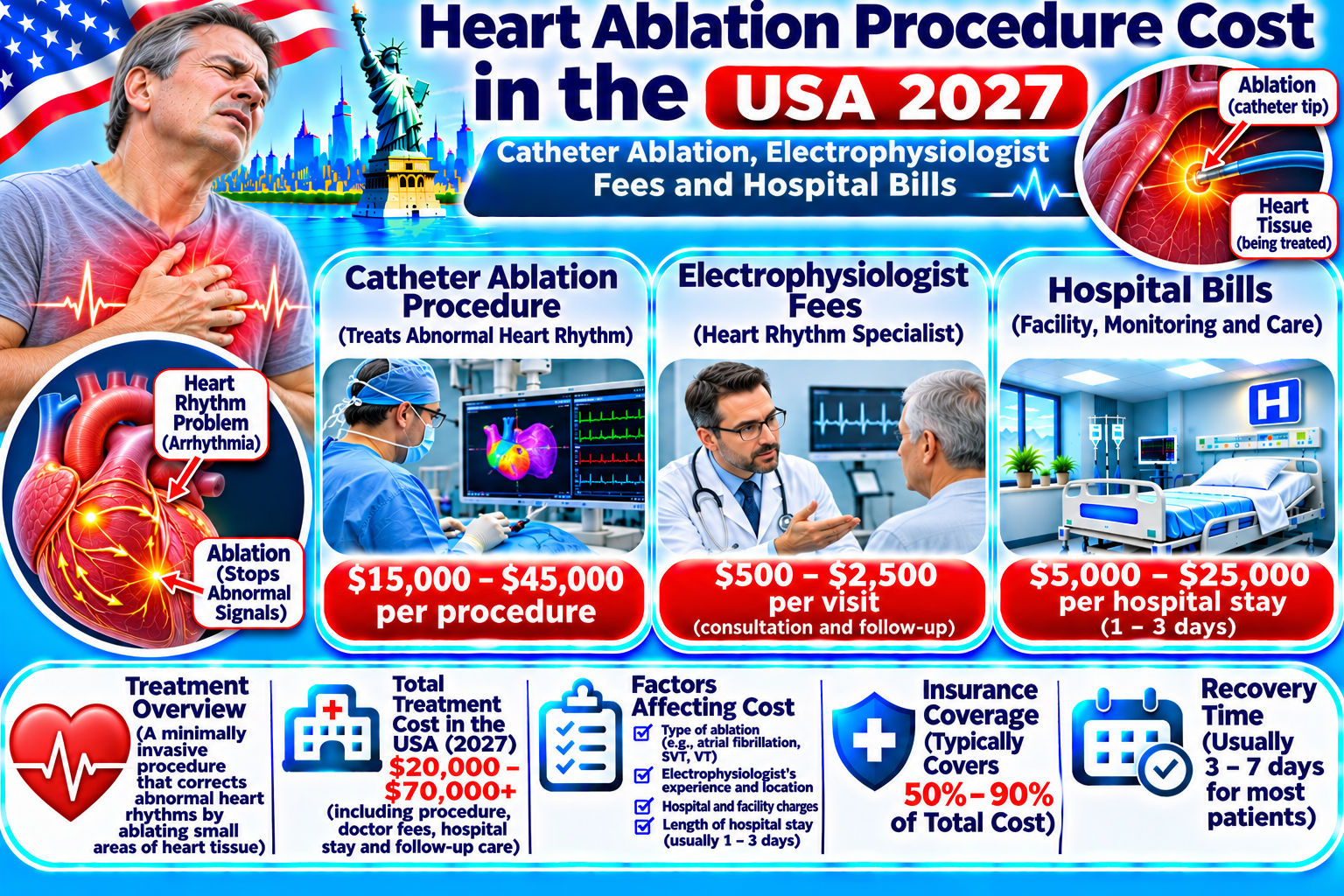
Heart ablation is a specialized cardiac procedure used to treat certain abnormal heart rhythms, also known as arrhythmias. It involves targeting small areas of heart tissue responsible for abnormal electrical signals. For appropriately selected patients, catheter ablation can reduce symptoms, improve heart rhythm control, and sometimes reduce the need for long-term antiarrhythmic medication.
Understanding heart ablation procedure costs in the USA in 2027 is important for patients comparing catheter ablation, electrophysiologist fees, hospital bills, anesthesia charges, and health insurance coverage. The total expense depends on the type of arrhythmia, ablation technology, treatment setting, insurance benefits, and individual medical circumstances.
Some procedures are relatively straightforward, while others require advanced three-dimensional mapping, specialized catheters, and extensive cardiac monitoring. Atrial fibrillation ablation, for example, is generally more complex than treatment of certain forms of supraventricular tachycardia.
This comprehensive guide explains estimated American heart ablation costs for 2027, including radiofrequency ablation, cryoablation, pulsed field ablation, specialist consultations, Medicare coverage, recovery, and potential repeat procedures.
What Is Heart Ablation?
Heart ablation is a treatment designed to interrupt abnormal electrical pathways or signals that cause certain heart rhythm disorders.
The most common approach is catheter ablation. During the procedure, an electrophysiologist guides thin, flexible catheters through blood vessels into the heart.
Specialized equipment identifies the electrical activity responsible for the arrhythmia. Energy is then delivered to targeted tissue to interrupt the abnormal signals.
Catheter ablation does not require the same type of large chest incision used in conventional open-heart surgery.
However, it remains an invasive cardiac procedure with potential complications and requires careful patient selection.
Common Heart Conditions Treated With Ablation
Atrial Fibrillation
Atrial fibrillation, commonly called AFib, is an irregular heart rhythm originating in the upper chambers of the heart.
Catheter ablation frequently involves pulmonary vein isolation to reduce abnormal electrical signals that trigger atrial fibrillation.
Not every patient with AFib needs ablation. Treatment decisions depend on symptoms, heart function, medical history, and individual preferences.
Supraventricular Tachycardia
Supraventricular tachycardia, or SVT, describes several rapid heart rhythms that originate above the ventricles.
Catheter ablation can be highly effective for certain SVT mechanisms, including atrioventricular nodal reentrant tachycardia and accessory pathway-related tachycardia.
Atrial Flutter
Atrial flutter is an organized but abnormally rapid rhythm arising in the atria.
Typical atrial flutter can often be treated by creating a line of electrical block in a specific region of the right atrium.
Ventricular Tachycardia
Ventricular tachycardia originates in the lower chambers of the heart and may be associated with structural heart disease.
Some patients require complex ablation procedures involving advanced mapping, longer operating times, and additional monitoring.
Premature Ventricular Contractions
Frequent premature ventricular contractions may cause symptoms or contribute to reduced heart function in selected patients.
Catheter ablation may be considered when symptoms are significant or when frequent abnormal beats affect cardiac performance.
Symptoms of Heart Rhythm Disorders
Arrhythmias can cause a range of symptoms depending on the type, frequency, and underlying heart condition.
- Rapid or irregular heartbeat.
- Palpitations or fluttering sensations.
- Dizziness or lightheadedness.
- Unusual fatigue.
- Shortness of breath.
- Reduced exercise tolerance.
- Chest discomfort.
- Fainting in certain rhythm disorders.
Some arrhythmias cause few noticeable symptoms. Others require urgent medical evaluation.
Chest pain, severe breathing difficulty, or fainting accompanied by persistent symptoms requires immediate medical attention.
How Are Arrhythmias Diagnosed?
Before recommending ablation, a cardiologist evaluates the patient’s symptoms, medical history, and cardiac electrical activity.
Common diagnostic tests include:
- Electrocardiogram to record heart rhythm.
- Holter monitoring or extended rhythm monitoring.
- Echocardiogram to assess heart structure and function.
- Blood tests when appropriate.
- Exercise stress testing for selected patients.
- Cardiac CT or MRI in specific circumstances.
- Electrophysiology study to identify abnormal electrical pathways.
Not every patient requires every test. The diagnostic approach depends on the suspected arrhythmia and overall cardiac condition.
Types of Heart Ablation Procedures
Radiofrequency Catheter Ablation
Radiofrequency ablation uses controlled heat energy to create small areas of tissue injury that interrupt abnormal electrical conduction.
It is used for several arrhythmias, including selected SVTs, atrial flutter, atrial fibrillation, and ventricular tachycardia.
Cryoablation
Cryoablation uses freezing temperatures to target abnormal electrical pathways.
Cryoballoon technology may be used for pulmonary vein isolation in selected patients with atrial fibrillation.
Procedure costs depend on the equipment, disposable catheters, and treatment setting.
Pulsed Field Ablation
Pulsed field ablation uses high-voltage electrical pulses to create targeted cell injury through a process called electroporation.
This newer technology is used for selected atrial fibrillation procedures and may offer certain safety advantages for nearby tissues.
Availability, equipment expenses, and insurance arrangements vary among healthcare facilities.
AV Node Ablation
AV node ablation interrupts electrical conduction between the atria and ventricles to control ventricular rate in selected patients.
It usually requires a permanent pacemaker because the heart can no longer rely on normal conduction through the AV node.
This treatment does not eliminate atrial fibrillation itself.
Surgical Ablation
Some patients undergo surgical ablation, including selected Maze-type procedures, particularly when another cardiac operation is being performed.
Surgical ablation involves different hospital resources and generally should not be compared directly with standard catheter ablation pricing.
How Is Catheter Ablation Performed?
Catheter ablation is usually performed in a specialized electrophysiology laboratory.
The patient receives sedation or general anesthesia depending on the arrhythmia, technique, and medical requirements.
The electrophysiologist inserts catheters through blood vessels, commonly in the groin, and guides them toward the heart.
Electrical mapping identifies the abnormal signals. The physician then delivers the selected ablation energy to targeted tissue.
After treatment, the team checks rhythm responses and monitors the patient for complications.
Some patients return home the same day, while others require overnight observation or longer hospitalization.
Heart Ablation Procedure Cost in the USA in 2027
American catheter ablation prices vary considerably according to the type of arrhythmia, hospital resources, ablation technology, insurance contract, and procedure complexity.
Published US research has demonstrated substantial price differences across hospitals and insurance arrangements.
The following figures are illustrative 2027 budgeting ranges, not verified national averages, guaranteed quotations, or the amount every insured patient will pay.
Estimated USA Cost Breakdown
| Treatment or Service | Estimated Cost (USD) |
|---|---|
| Cardiologist Consultation | $150–$500+ |
| Electrophysiologist Consultation | $200–$700+ |
| Electrocardiogram | $50–$300+ |
| Holter or Extended Rhythm Monitoring | $150–$1,500+ |
| Echocardiogram | $300–$2,000+ |
| SVT Catheter Ablation Episode | $15,000–$40,000+ |
| Typical Atrial Flutter Ablation | $12,000–$35,000+ |
| Atrial Fibrillation Ablation | $25,000–$65,000+ |
| Pulsed Field Ablation Episode | $30,000–$70,000+ |
| Complex Ventricular Tachycardia Ablation | $30,000–$90,000+ |
| Electrophysiologist Procedure Fee | $1,000–$5,000+ if separately billed |
| Anesthesia Professional Fee | $500–$3,000+ if separately billed |
| Postoperative Follow-Up Appointment | $100–$400+ |
Important: These broad estimates are intended for preliminary financial planning. Procedure episode prices may already include physician, facility, mapping equipment, anesthesia, and monitoring expenses. Do not add individual charges to a bundled price without checking for overlap.
USA Heart Ablation Cost Comparison
Because this article focuses on the United States, the following table compares American ablation treatment scenarios rather than different countries.
| USA Treatment Scenario | Illustrative Overall Budget |
|---|---|
| Typical Atrial Flutter Ablation | $12,000–$35,000+ |
| SVT Catheter Ablation | $15,000–$40,000+ |
| Atrial Fibrillation Ablation | $25,000–$65,000+ |
| Pulsed Field AFib Ablation | $30,000–$70,000+ |
| Complex Ventricular Ablation | $30,000–$90,000+ |
| Repeat or Complicated Ablation Episode | $35,000–$100,000+ |
These procedures treat different rhythm disorders and should not be considered interchangeable alternatives based on cost alone.
Electrophysiologist Fees for Heart Ablation
A cardiac electrophysiologist is a cardiologist with specialized training in diagnosing and treating heart rhythm disorders.
Professional fees depend on the complexity of the arrhythmia, procedure duration, required mapping techniques, and insurance contracts.
Patients may receive separate charges for the initial consultation, electrophysiology study, ablation procedure, and postoperative appointments.
When comparing quotations, patients should confirm whether the electrophysiologist’s professional fee is included in the hospital estimate.
Hospital Bills and Electrophysiology Laboratory Charges
Hospital facility expenses often represent a substantial portion of the total heart ablation bill.
Common charges may include:
- Electrophysiology laboratory services.
- Specialized mapping and imaging equipment.
- Ablation catheters and disposable supplies.
- Nursing and technical staff.
- Anesthesia and sedation services.
- Recovery room monitoring.
- Medications and laboratory testing.
- Overnight hospitalization when required.
A 2026 Massachusetts healthcare spending analysis reported that the average commercially insured cardiac ablation procedure price exceeded $50,000 in 2024.
The same analysis found substantial price differences between hospitals, illustrating why patients should compare complete estimates rather than relying on a single advertised price.
Radiofrequency vs Cryoablation Costs
Radiofrequency and cryoablation use different energy sources to treat abnormal cardiac electrical pathways.
Radiofrequency procedures use heat energy, while cryoablation uses freezing technology.
Both approaches require specialized equipment, catheters, trained personnel, and appropriate cardiac monitoring.
Costs vary according to the treatment strategy and hospital contracts. Neither technique is automatically less expensive in every healthcare setting.
Clinical suitability, safety, and expected effectiveness should guide treatment selection.
Pulsed Field Ablation and New Technology Expenses
Pulsed field ablation is an increasingly used technology for selected atrial fibrillation procedures.
It uses electrical pulses to target cardiac tissue and may reduce certain risks associated with thermal energy near sensitive structures.
However, pulsed field systems involve specialized equipment and disposable components.
The total financial impact depends on equipment pricing, procedure duration, hospital contracts, and insurance reimbursement.
Patients should ask whether their insurance covers the proposed technology and whether additional authorization is necessary.
Medicare Reimbursement and Heart Ablation Costs
Medicare reimbursement differs from commercial hospital billing and should not be interpreted as the amount every patient pays.
For 2026, published Medicare hospital outpatient payment information listed approximately $26,704 for selected complex catheter ablation procedures, including atrial fibrillation pulmonary vein isolation.
Separate ambulatory surgery center payment information listed approximately $20,256 for the corresponding atrial fibrillation ablation category.
These figures are payment benchmarks for particular settings and procedure classifications, not complete universal patient bills.
Fiscal year 2027 inpatient Medicare payment examples for certain percutaneous intracardiac procedures range from approximately $24,620 without major complications or comorbidities to $31,761 with major complications or comorbidities.
Actual Medicare reimbursement depends on the procedure, care setting, hospital adjustments, and applicable payment rules.
Heart Ablation With Health Insurance
Many comprehensive American health insurance plans cover medically necessary catheter ablation when applicable clinical requirements are satisfied.
Coverage depends on the diagnosis, documented symptoms, treatment history, and individual insurance policy.
Important considerations include:
- Annual deductible and out-of-pocket maximum.
- Electrophysiologist and hospital network participation.
- Prior authorization for planned procedures.
- Coverage for radiofrequency or cryoablation.
- Coverage for pulsed field ablation.
- Anesthesia and facility benefits.
- Diagnostic testing and follow-up coverage.
- Coverage for repeat ablation when necessary.
Insurance approval does not necessarily eliminate patient expenses. Copayments, coinsurance, and deductibles may still apply.
Medicare Coverage for Catheter Ablation
Original Medicare generally covers medically necessary cardiac ablation services when applicable requirements are met.
Medicare Part A commonly applies to qualifying inpatient hospital admissions. Medicare Part B generally covers eligible outpatient procedures and physician services.
For covered Part B services, patients typically pay applicable deductibles and coinsurance unless supplemental coverage changes their responsibility.
Medicare Advantage plans may have different provider networks, authorization rules, and cost-sharing arrangements.
Medicaid and Financial Assistance
Medicaid may cover medically necessary heart ablation for eligible individuals, depending on state-specific requirements.
Some nonprofit hospitals provide financial assistance programs for qualifying patients.
Hospital financial counselors can explain payment arrangements, insurance eligibility questions, and available assistance.
Heart Ablation Without Insurance
Uninsured patients may face substantial expenses for specialist consultations, diagnostic examinations, the ablation procedure, and hospital monitoring.
Before accepting a planned treatment quotation, patients should ask:
- Does the estimate include the electrophysiologist’s fee?
- Are mapping equipment and ablation catheters included?
- Will anesthesia be billed separately?
- Does the price include recovery room monitoring?
- Are overnight hospital charges included?
- What follow-up expenses should be expected?
- Does the hospital offer financial assistance?
Patients with urgent cardiac symptoms should not delay necessary medical treatment while comparing prices.
Factors Influencing Heart Ablation Prices
1. Type of Arrhythmia
Different rhythm disorders require different mapping strategies, ablation techniques, and procedure durations.
2. Ablation Technology
Radiofrequency, cryoablation, and pulsed field systems involve different equipment and disposable supply costs.
3. Hospital and Facility Charges
Electrophysiology laboratory resources, staffing, anesthesia, and recovery monitoring influence the total bill.
4. Electrophysiologist Experience
Complex procedures may require additional expertise, advanced equipment, and longer treatment times.
5. Insurance Coverage
Deductibles, coinsurance, negotiated rates, and provider networks affect personal financial responsibility.
6. Geographic Location
Healthcare prices vary across American cities and states because of regional operating costs and insurance contracts.
7. Complications or Repeat Procedures
Additional treatment, prolonged hospitalization, or repeat ablation may increase long-term medical expenses.
Recovery After Catheter Ablation
Recovery depends on the arrhythmia treated, ablation technique, anesthesia, and overall health.
Many patients undergoing uncomplicated catheter ablation return home after a short monitoring period.
Temporary soreness or bruising near the catheter insertion site is common.
Patients should follow individualized instructions regarding physical activity, wound care, driving, and return to work.
Some patients experience temporary palpitations during recovery, particularly after atrial fibrillation ablation.
Possible Complications and Additional Costs
Catheter ablation carries potential risks, including bleeding, blood vessel injury, infection, heart perforation, stroke, and injury to the heart’s electrical conduction system.
Some complications are uncommon but serious and may require emergency treatment or additional procedures.
Patients should discuss procedure-specific risks and expected benefits with their electrophysiologist.
Long-Term Follow-Up and Medication Expenses
After ablation, patients may need follow-up appointments, electrocardiograms, rhythm monitoring, and medication adjustments.
Some individuals continue antiarrhythmic medications temporarily or long term.
Importantly, successful atrial fibrillation ablation does not automatically eliminate the need for anticoagulant medication. Stroke prevention decisions depend on the patient’s individual risk factors.
These ongoing services should be considered when estimating total treatment costs.
How to Reduce Heart Ablation Expenses
- Verify insurance coverage before planned treatment.
- Request a complete written hospital estimate.
- Confirm electrophysiologist and facility network participation.
- Ask whether anesthesia and mapping equipment are included.
- Review Medicare or Medicaid eligibility where applicable.
- Explore hospital financial assistance programs.
- Confirm postoperative monitoring coverage.
- Discuss medically appropriate treatment options with the cardiologist.
The lowest advertised price is not necessarily the safest or most effective treatment option. Clinical suitability and specialist expertise remain essential.
Frequently Asked Questions
How much does heart ablation cost in the USA in 2027?
Illustrative costs may range from approximately $12,000 to $40,000 for selected simpler ablation procedures and $25,000 to $65,000 or more for atrial fibrillation ablation. Complex cases may cost substantially more.
Does insurance cover catheter ablation?
Many comprehensive health plans cover medically necessary catheter ablation, subject to policy requirements and patient cost-sharing.
Does Medicare cover heart ablation?
Medicare generally covers qualifying medically necessary ablation procedures under applicable inpatient or outpatient benefits.
Is pulsed field ablation more expensive?
Pulsed field ablation may involve higher specialized equipment expenses, but actual treatment prices depend on the hospital and insurance contract.
Can an arrhythmia return after ablation?
Yes. Some patients experience recurrent arrhythmias and may require medication adjustments or repeat treatment.
Is catheter ablation open-heart surgery?
No. Catheter ablation is generally performed through blood vessels without the large chest incision used in conventional open-heart surgery.
How long does recovery take?
Recovery varies by procedure. Many patients resume light routine activities within several days, while full recovery and rhythm stabilization may take longer.
Conclusion
Heart ablation procedure costs in the USA in 2027 depend on catheter ablation technology, electrophysiologist fees, hospital charges, anesthesia, treatment complexity, and insurance coverage.
Patients should compare complete treatment estimates, verify insurance benefits, and consult an experienced cardiac electrophysiologist to determine the most appropriate treatment plan.
Accurate diagnosis, appropriate procedure selection, and consistent follow-up care are important for managing heart rhythm disorders and long-term healthcare expenses.
Medical Disclaimer: This article provides general educational and financial planning information only. It does not replace professional medical advice, diagnosis, or treatment. All 2027 cost ranges are illustrative estimates and should be verified directly with healthcare providers, hospitals, and insurance companies.
