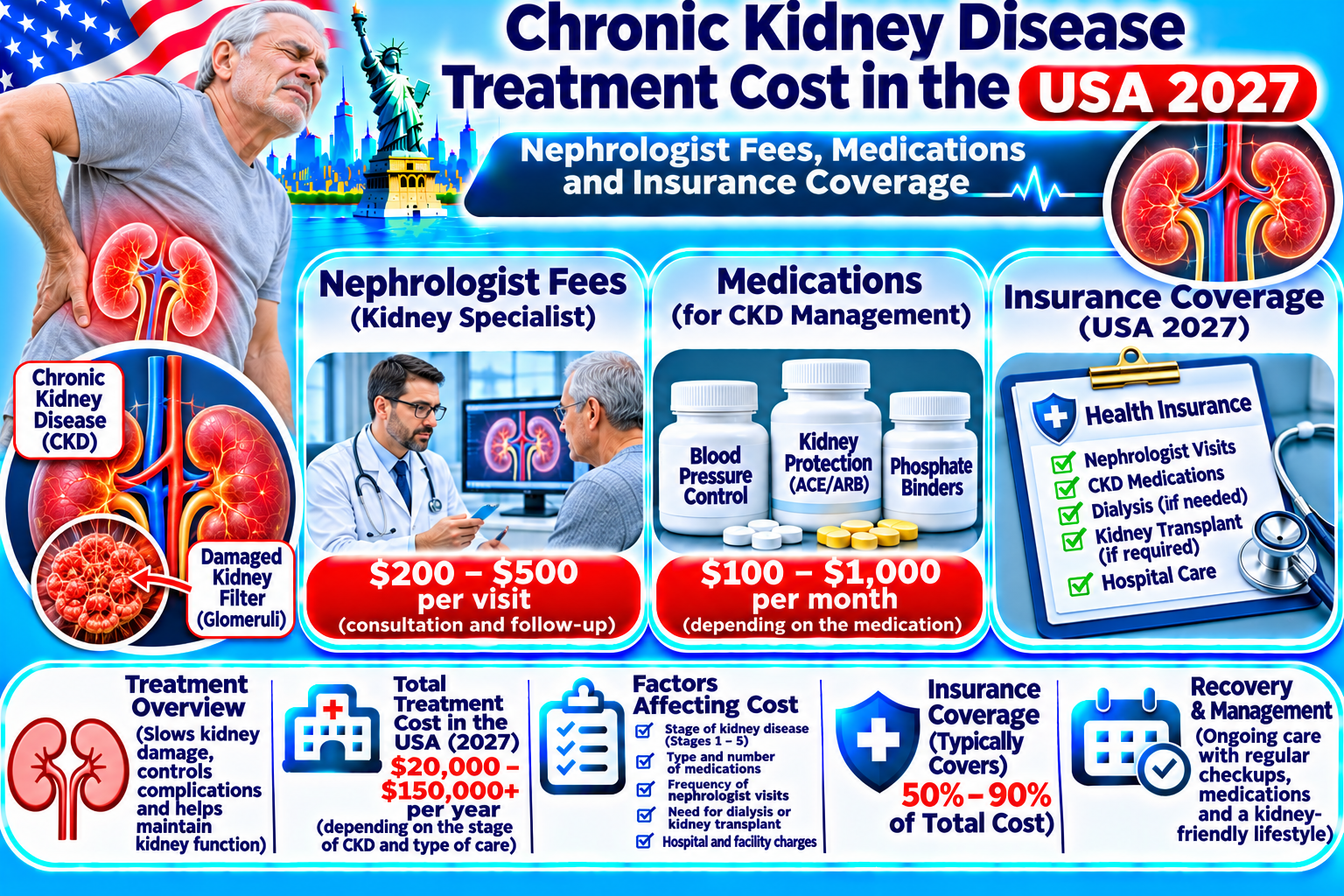
Chronic kidney disease (CKD) is a long-term medical condition in which the kidneys gradually lose their ability to filter waste products and excess fluid from the blood. Without appropriate monitoring and treatment, kidney damage may progress and increase the risk of heart disease, anemia, fluid retention, and kidney failure.
Understanding chronic kidney disease treatment costs in the USA in 2027 is important for patients comparing nephrologist consultation fees, prescription medications, laboratory testing, hospital expenses, and health insurance coverage. Medical costs depend on kidney disease stage, underlying health conditions, treatment requirements, insurance benefits, and geographic location.
Many patients with early-stage CKD can manage their condition through blood pressure control, diabetes treatment, appropriate medications, and regular monitoring. Advanced kidney disease may require specialized care, dialysis preparation, or kidney transplantation.
This guide explains estimated American CKD treatment expenses for 2027, including diagnostic tests, nephrologist visits, medications, Medicare coverage, and strategies for managing long-term healthcare costs.
What Is Chronic Kidney Disease?
Chronic kidney disease occurs when abnormalities in kidney structure or function persist for at least three months and have implications for health.
Doctors commonly assess kidney function using estimated glomerular filtration rate (eGFR) and urine albumin measurements.
CKD is classified according to kidney function, albuminuria, and underlying cause. These factors help estimate progression risk and determine treatment intensity.
Not everyone with CKD develops kidney failure. Appropriate treatment can slow progression and reduce cardiovascular complications.
Stages of Chronic Kidney Disease
| CKD Stage | Kidney Function |
|---|---|
| G1 | eGFR 90 or higher with evidence of kidney damage |
| G2 | eGFR 60–89 with evidence of kidney damage |
| G3a | eGFR 45–59 |
| G3b | eGFR 30–44 |
| G4 | eGFR 15–29 |
| G5 | eGFR below 15 |
Stages G1 and G2 require additional evidence of kidney damage for a CKD diagnosis. A single abnormal laboratory result does not necessarily establish chronic disease.
Common Symptoms of Chronic Kidney Disease
Early CKD frequently causes no noticeable symptoms. As kidney function declines, patients may experience:
- Persistent fatigue or weakness.
- Swelling in the legs, ankles, or feet.
- Changes in urination.
- Reduced appetite or nausea.
- Difficulty concentrating.
- Muscle cramps.
- Shortness of breath from fluid accumulation.
- Persistent itching in advanced disease.
These symptoms can have several causes. Laboratory testing is necessary to assess kidney function accurately.
Causes and Risk Factors
Diabetes and high blood pressure are major causes of chronic kidney disease in the United States.
Other risk factors include:
- Cardiovascular disease.
- Family history of kidney disease.
- Polycystic kidney disease.
- Autoimmune kidney disorders.
- Repeated kidney infections or obstruction.
- Older age.
- Exposure to certain kidney-damaging medications.
Patients with risk factors may benefit from regular kidney function and urine albumin testing.
How Is Chronic Kidney Disease Diagnosed?
Diagnosis usually involves blood tests, urine examinations, and evaluation of medical history.
Common diagnostic services include:
- Serum creatinine and estimated GFR testing.
- Urine albumin-to-creatinine ratio.
- Urinalysis.
- Electrolyte and metabolic blood panels.
- Kidney ultrasound when indicated.
- Blood pressure assessment.
- Additional tests or kidney biopsy in selected cases.
Repeated testing helps determine whether kidney abnormalities are persistent and whether kidney function is changing over time.
Chronic Kidney Disease Treatment Options
Blood Pressure Management
Controlling blood pressure is an important part of CKD treatment. ACE inhibitors or angiotensin receptor blockers may be recommended for certain patients, particularly when albuminuria is present.
These medications require appropriate monitoring of kidney function and potassium levels.
Diabetes Management
Patients with diabetes-related CKD may benefit from individualized blood glucose management and kidney-protective medications.
SGLT2 inhibitors can reduce the risk of kidney disease progression and cardiovascular complications in eligible patients.
Additional Kidney-Protective Medications
Selected patients may receive medications such as finerenone or GLP-1 receptor agonists according to their medical condition and current treatment recommendations.
Medication selection depends on kidney function, potassium levels, diabetes status, and other clinical factors.
Treatment of CKD Complications
Advanced CKD may require treatment for anemia, mineral and bone disorders, fluid overload, electrolyte abnormalities, and metabolic acidosis.
These complications can increase medication expenses and the frequency of specialist visits.
Nutrition and Lifestyle Management
Dietary recommendations may involve sodium reduction, individualized protein intake, and adjustments to potassium or phosphorus intake when necessary.
A renal dietitian can help patients develop a safe eating plan based on laboratory results and kidney function.
Chronic Kidney Disease Treatment Cost in the USA in 2027
American CKD treatment expenses depend on disease stage, specialist appointments, laboratory monitoring, medication selection, and hospital care.
Patients with advanced kidney disease generally require more medical services than those with stable early-stage CKD.
The following figures are illustrative 2027 budgeting estimates rather than verified national averages or guaranteed healthcare quotations.
Estimated USA Cost Breakdown
| Treatment or Service | Estimated Cost (USD) |
|---|---|
| Initial Nephrologist Consultation | $200–$600+ |
| Follow-Up Nephrology Appointment | $100–$350+ |
| Kidney Function Blood Tests | $50–$250+ |
| Urine Albumin Testing | $30–$150+ |
| Kidney Ultrasound | $200–$800+ |
| Generic Blood Pressure Medication | $5–$50+ per month |
| SGLT2 Inhibitor Medication | $100–$700+ per month |
| Specialized CKD Medication | $100–$1,000+ per month |
| Renal Dietitian Consultation | $100–$300+ |
| Kidney Biopsy When Necessary | $3,000–$10,000+ |
| Hospitalization for CKD Complications | $10,000–$40,000+ |
Important: These hypothetical prices are preliminary estimates. Actual charges, insurer-negotiated rates, pharmacy prices, and patient out-of-pocket expenses may differ substantially.
USA CKD Treatment Cost Comparison by Stage
Because this guide focuses on the United States, the following table compares illustrative American treatment scenarios rather than different countries.
| USA CKD Treatment Scenario | Illustrative Annual Direct Care Budget |
|---|---|
| Stable Early CKD With Routine Monitoring | $500–$3,000+ |
| Moderate CKD With Regular Specialist Care | $2,000–$8,000+ |
| Advanced CKD With Multiple Medications | $5,000–$20,000+ |
| Advanced CKD With Hospital Complications | $15,000–$60,000+ |
These figures illustrate selected kidney-related services and are not comprehensive all-condition healthcare spending averages. Dialysis and transplantation are excluded from these annual scenarios.
Nephrologist Consultation and Follow-Up Fees
A nephrologist is a physician specializing in kidney diseases. Patients may need periodic appointments to review kidney function, blood pressure, urine protein levels, and medication effectiveness.
Appointment frequency depends on disease severity and the risk of progression. Patients with stable early CKD may require fewer specialist visits than those with rapidly declining kidney function.
Additional expenses may include laboratory testing, imaging, prescription adjustments, and treatment of associated medical conditions.
Chronic Kidney Disease Medication Costs
Medication expenses vary considerably. Generic blood pressure medicines may be relatively inexpensive, while newer kidney-protective drugs can have higher prices before insurance adjustments.
Some patients require several medications to manage diabetes, high blood pressure, cholesterol, anemia, and other CKD complications.
Drug selection should reflect medical evidence, kidney function, safety considerations, and the patient’s individual needs.
Patients should never discontinue prescribed medications solely because of cost without discussing alternatives with their healthcare professional.
Hospital Expenses for Advanced CKD
Hospitalization may become necessary when patients develop severe fluid overload, dangerous electrolyte abnormalities, acute kidney injury, or other serious complications.
Hospital charges can include emergency evaluation, specialist consultations, laboratory testing, imaging, intravenous medications, and inpatient monitoring.
Published American research demonstrates that hospitalization is a major contributor to overall CKD healthcare spending.
Preventive monitoring and appropriate treatment may help reduce avoidable complications, although not every hospitalization can be prevented.
Dialysis and Kidney Transplant Considerations
Some patients with advanced CKD eventually develop kidney failure requiring dialysis or kidney transplantation.
Dialysis is not routinely required for all patients with stage G4 or G5 CKD. Decisions depend on symptoms, complications, laboratory findings, and shared medical decision-making.
Dialysis and transplantation involve separate financial considerations, including treatment sessions, surgery, medications, transportation, and long-term monitoring.
Patients approaching kidney failure should discuss treatment planning and insurance coverage with their nephrology team.
Chronic Kidney Disease Treatment With Health Insurance
Many comprehensive American health insurance plans cover medically necessary CKD evaluation and treatment.
However, insurance coverage does not necessarily eliminate personal expenses.
Important coverage considerations include:
- Annual deductible and out-of-pocket maximum.
- Nephrologist and hospital network participation.
- Prescription medication formulary coverage.
- Laboratory and diagnostic imaging benefits.
- Prior authorization for selected medications.
- Coverage for renal nutrition counseling.
- Hospitalization and emergency care benefits.
- Dialysis coverage if kidney failure develops.
Patients should review their insurance benefits regularly because formularies, premiums, and cost-sharing requirements may change.
Medicare Coverage for Chronic Kidney Disease
Original Medicare generally covers qualifying medically necessary kidney disease services, including eligible physician visits, laboratory testing, and hospital treatment.
Medicare Part A commonly applies to qualifying inpatient hospital admissions. Medicare Part B generally covers eligible outpatient medical services.
Prescription medications may be covered through Medicare Part D, depending on the medication and plan formulary.
For 2027, Medicare has announced a $700 maximum Part D deductible and a $2,400 annual out-of-pocket threshold for covered Part D drugs.
These prescription limits do not represent a universal cap on all medical spending, hospital charges, or medications excluded from Part D coverage.
Special Medicare eligibility and coverage rules may apply to patients with end-stage renal disease.
Medicaid and Financial Assistance
Medicaid may cover medically necessary CKD services for eligible individuals, depending on state-specific requirements.
Some hospitals and healthcare organizations offer financial assistance programs.
Patients may also ask about prescription assistance, community health centers, and available support for transportation or nutrition counseling.
CKD Treatment Without Insurance
Uninsured patients may face substantial ongoing expenses for specialist visits, medications, laboratory monitoring, and hospital care.
Before scheduling nonemergency services, patients can request written estimates and discuss available payment arrangements.
For prescription medications, patients may ask whether medically appropriate generic alternatives or assistance programs are available.
Factors Influencing Chronic Kidney Disease Treatment Prices
1. Disease Stage
Advanced CKD generally requires more frequent monitoring and management of complications than stable early-stage disease.
2. Nephrologist Fees
Consultation prices depend on appointment complexity, provider contracts, and geographic location.
3. Medication Selection
Brand-name medications, generic alternatives, and insurance formularies can significantly affect pharmacy expenses.
4. Hospital and Facility Charges
Emergency treatment, inpatient monitoring, and management of complications can increase healthcare costs.
5. Insurance Coverage
Deductibles, copayments, coinsurance, and provider networks influence personal financial responsibility.
6. Other Medical Conditions
Diabetes, cardiovascular disease, and heart failure may increase treatment complexity and overall healthcare spending.
7. Geographic Location
Healthcare prices differ across American states and cities because of regional operating expenses and insurance arrangements.
Managing CKD and Reducing Long-Term Expenses
Appropriate disease management can help protect kidney function and reduce the risk of costly complications.
Useful strategies include:
- Attend recommended kidney function appointments.
- Monitor blood pressure according to medical advice.
- Manage diabetes when present.
- Take prescribed medications consistently.
- Discuss kidney-safe medication use with clinicians.
- Follow individualized dietary recommendations.
- Review insurance and prescription benefits.
- Ask about financial assistance when necessary.
Patients should avoid unapproved supplements or frequent use of potentially kidney-damaging medications without professional guidance.
Frequently Asked Questions
How much does chronic kidney disease treatment cost in the USA in 2027?
Illustrative kidney-related outpatient expenses may range from several hundred dollars annually for stable early disease to thousands of dollars for advanced CKD requiring frequent monitoring and multiple medications. Hospital complications can increase costs considerably.
Does insurance cover nephrologist visits?
Many comprehensive insurance plans cover medically necessary nephrology consultations, subject to network requirements and applicable cost-sharing.
Does Medicare cover CKD medications?
Many qualifying prescription medications may be covered under Medicare Part D, depending on the drug and the patient’s plan.
Can chronic kidney disease be cured?
CKD is often a long-term condition that cannot be fully reversed. However, appropriate treatment can slow progression and reduce complications.
Does every CKD patient need dialysis?
No. Many patients never require dialysis. Kidney replacement therapy is considered when kidney failure and related clinical problems make it necessary.
Are newer kidney medications expensive?
Some newer kidney-protective medications have higher prices than older generic drugs. Insurance coverage, available formulations, and financial assistance can affect the final amount paid.
Conclusion
Chronic kidney disease treatment costs in the USA in 2027 depend on nephrologist fees, prescription medications, laboratory testing, hospital expenses, disease severity, and insurance coverage.
Early diagnosis, consistent medical monitoring, and appropriate treatment can help patients protect kidney function and manage long-term healthcare needs.
Patients should obtain personalized financial estimates, review insurance benefits, and consult qualified healthcare professionals before making treatment decisions.
Medical Disclaimer: This article provides general educational and financial planning information only. It does not replace professional medical advice, diagnosis, or treatment. All 2027 cost ranges are illustrative estimates and should be verified directly with healthcare providers, hospitals, pharmacies, and insurance companies.
