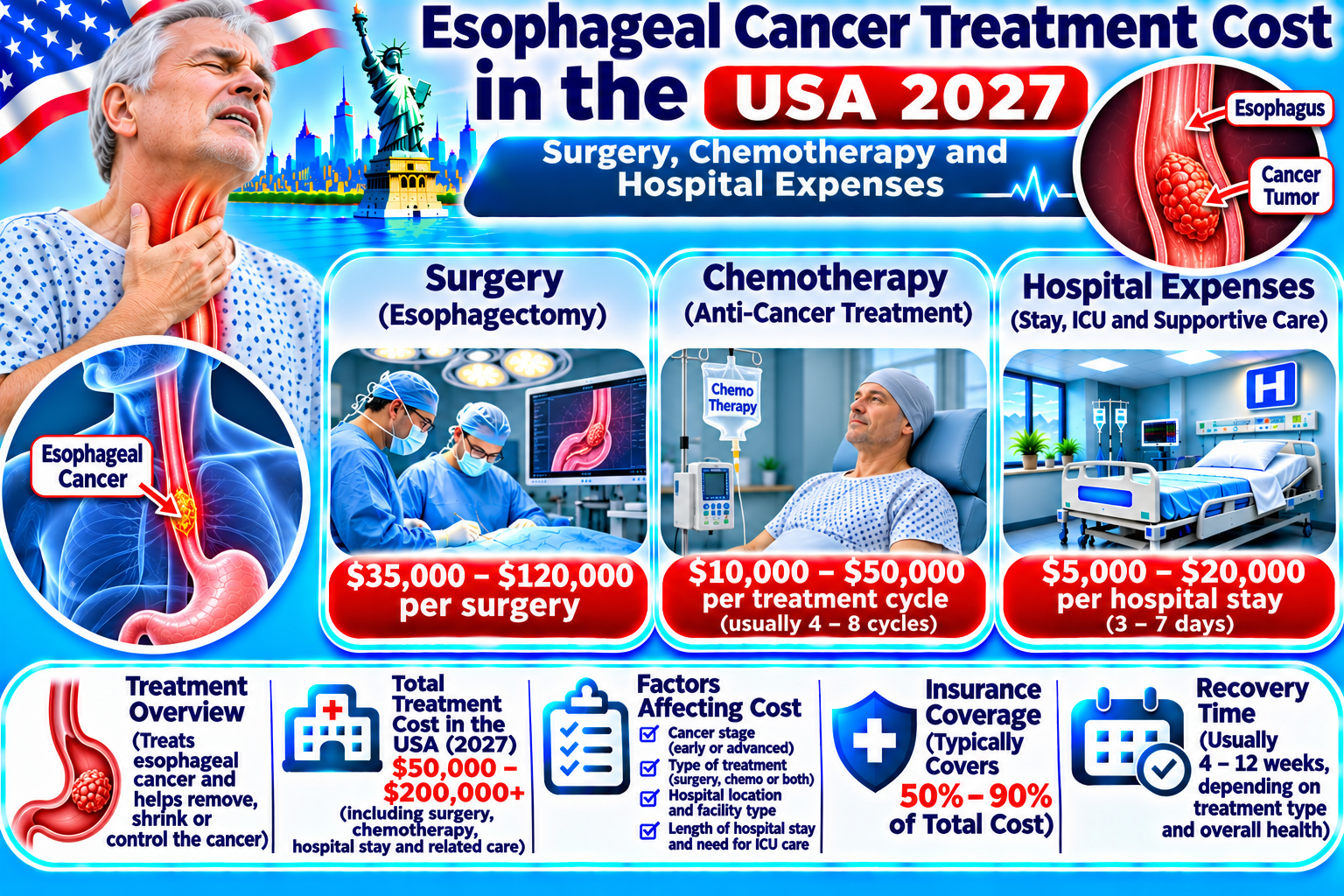
Esophageal cancer is a serious disease that develops when abnormal cells grow uncontrollably in the esophagus, the muscular tube connecting the throat to the stomach. The condition can interfere with swallowing, nutrition, and normal digestive function. Early diagnosis and appropriate treatment are important for improving outcomes and maintaining quality of life.
Understanding esophageal cancer treatment costs in the USA in 2027 is essential for patients comparing esophagectomy surgery, chemotherapy, radiation therapy, immunotherapy, oncologist fees, and hospital expenses. The total cost depends on cancer stage, treatment selection, hospital location, insurance benefits, and individual medical needs.
Some early cancers can be treated with endoscopic procedures or surgery, while locally advanced disease often requires a combination of chemotherapy, radiation, and surgery. Patients with metastatic disease may receive systemic medications and supportive care.
This comprehensive guide explains estimated American esophageal cancer treatment expenses for 2027, including diagnostic examinations, surgical procedures, cancer medications, hospital bills, Medicare coverage, and financial assistance.
What Is Esophageal Cancer?
Esophageal cancer begins in cells lining the esophagus. As the disease progresses, cancer may grow into deeper layers of the esophageal wall or spread to nearby lymph nodes and distant organs.
The two major types are esophageal adenocarcinoma and esophageal squamous cell carcinoma.
Adenocarcinoma commonly develops in the lower esophagus and is often associated with Barrett’s esophagus. Squamous cell carcinoma can occur throughout the esophagus and has different risk factors.
Treatment depends on the cancer’s location, stage, histological type, molecular characteristics, and the patient’s overall health.
Common Symptoms of Esophageal Cancer
Symptoms may develop gradually, and early-stage disease sometimes causes few noticeable problems.
- Difficulty swallowing solid foods or liquids.
- Pain or discomfort while swallowing.
- Unexplained weight loss.
- Persistent heartburn or chest discomfort.
- Regurgitation of food.
- Chronic cough or hoarseness.
- Reduced appetite and nutritional difficulties.
- Unexplained fatigue.
Persistent swallowing difficulty should receive prompt medical evaluation. Inability to swallow liquids, severe dehydration, or significant bleeding requires urgent care.
Risk Factors for Esophageal Cancer
Several factors can increase the likelihood of developing esophageal cancer.
- Long-standing gastroesophageal reflux disease.
- Barrett’s esophagus.
- Tobacco smoking.
- Heavy alcohol consumption, particularly for squamous cell carcinoma.
- Obesity, especially in association with adenocarcinoma.
- Older age.
- Previous radiation exposure to the chest.
- Certain uncommon inherited or medical conditions.
Having a risk factor does not mean cancer will develop. Patients with persistent symptoms should discuss appropriate evaluation with a healthcare professional.
How Is Esophageal Cancer Diagnosed?
Diagnosis generally begins with a medical history and examination followed by testing to identify suspicious tissue.
Common diagnostic procedures include:
- Upper gastrointestinal endoscopy.
- Endoscopic biopsy to confirm cancer.
- Endoscopic ultrasound to assess local tumor involvement.
- CT scanning of the chest and abdomen.
- PET/CT imaging when clinically appropriate.
- Pathology and biomarker testing to guide treatment.
Additional examinations may be necessary to determine whether cancer has spread. Accurate staging helps the oncology team select an appropriate treatment strategy.
Esophageal Cancer Treatment Options
Endoscopic Treatment
Selected very early cancers may be treated through an endoscope without major surgery.
Endoscopic mucosal resection or endoscopic submucosal dissection can remove carefully selected superficial lesions.
These techniques are not appropriate for cancers that have invaded deeply or spread beyond the original site.
Esophagectomy Surgery
Esophagectomy involves removing part or most of the esophagus containing cancer. The surgeon commonly reconstructs the digestive passage using the stomach.
Nearby lymph nodes may also be removed to assess or treat cancer spread.
Esophagectomy is a major operation requiring specialized surgical expertise and postoperative monitoring.
Minimally Invasive Esophagectomy
Minimally invasive techniques use smaller incisions and specialized instruments. Some procedures involve robotic assistance.
For suitable patients, these approaches may reduce certain postoperative complications or shorten recovery compared with conventional open surgery.
However, surgical complexity and the need for specialized equipment can influence hospital charges.
Chemotherapy
Chemotherapy uses medications to destroy cancer cells or prevent their growth.
It may be given before surgery, after surgery in selected treatment plans, or as part of treatment for advanced disease.
Common regimens may include fluoropyrimidine-based medications, platinum drugs, or taxanes, depending on the cancer type and clinical circumstances.
Radiation Therapy
Radiation therapy uses high-energy radiation to target cancer cells.
It is frequently combined with chemotherapy for locally advanced disease and may also help relieve symptoms when surgery is not appropriate.
Immunotherapy and Targeted Treatment
Selected patients may receive immunotherapy or targeted medications according to tumor characteristics, treatment history, and current clinical recommendations.
These treatments can increase overall medical expenses, particularly when continued for several months.
Esophageal Cancer Treatment Cost in the USA in 2027
American esophageal cancer treatment expenses vary substantially according to cancer stage, surgical technique, hospital resources, medication selection, and length of treatment.
Published research using historical US Medicare data has shown that costs differ significantly across treatment phases and combinations of surgery, chemotherapy, and radiation.
The following figures are illustrative 2027 budgeting estimates rather than verified national averages, guaranteed quotations, or actual insurance payments.
Estimated USA Cost Breakdown
| Treatment or Service | Estimated Cost (USD) |
|---|---|
| Oncologist Consultation | $200–$700+ |
| Upper Endoscopy With Biopsy | $1,500–$5,000+ |
| Endoscopic Ultrasound | $1,500–$5,000+ |
| CT or PET/CT Imaging | $800–$5,000+ |
| Endoscopic Cancer Resection | $5,000–$20,000+ |
| Open Esophagectomy | $60,000–$130,000+ |
| Minimally Invasive Esophagectomy | $65,000–$140,000+ |
| Chemotherapy Treatment Course | $15,000–$50,000+ |
| Radiation Therapy Course | $20,000–$50,000+ |
| Immunotherapy Administration | $8,000–$25,000+ per treatment |
| Esophageal Stent Placement | $5,000–$20,000+ |
| Hospital Intensive Care | $4,000–$12,000+ per day |
Important: These hypothetical ranges are for preliminary budgeting. Surgery estimates may already include hospital, surgeon, anesthesia, and intensive care charges. Separate items should not be added without confirming what the quotation includes.
USA Esophageal Cancer Treatment Cost Comparison
Because this article focuses on the United States, the following table compares American treatment scenarios rather than different countries.
| USA Treatment Scenario | Illustrative Total Budget |
|---|---|
| Selected Early Cancer With Endoscopic Treatment | $8,000–$30,000+ |
| Esophagectomy Surgery Episode | $60,000–$140,000+ |
| Combined Chemoradiation | $35,000–$100,000+ |
| Surgery With Additional Cancer Treatment | $100,000–$220,000+ |
| Advanced Cancer With Extended Systemic Therapy | $80,000–$250,000+ |
These scenarios represent different medical needs. Treatment selection must depend on cancer stage, overall health, and oncology recommendations rather than price alone.
Esophagectomy Surgery and Hospital Expenses
Esophagectomy is a complex operation that requires experienced surgeons, anesthesia specialists, nursing staff, and postoperative monitoring.
The hospital bill may include operating room services, surgical equipment, intensive care, medications, nutrition support, and inpatient accommodation.
Some patients require feeding tube support during recovery. Complications such as infection, pneumonia, or anastomotic leakage can increase treatment expenses.
Chemotherapy Costs for Esophageal Cancer
Chemotherapy expenses depend on the drug regimen, number of cycles, infusion center charges, and supportive medications.
Patients may also need laboratory testing, imaging, anti-nausea medications, and additional oncology appointments.
Generic chemotherapy drugs can be less expensive than newer treatments, but the total cost includes more than medication prices.
Radiation Therapy and Chemoradiation Expenses
Radiation therapy commonly involves treatment planning, imaging, and multiple outpatient sessions.
Combining chemotherapy with radiation increases the number of services required and can raise overall costs.
For selected patients, chemoradiation may be used before surgery or as definitive treatment when surgery is unsuitable.
Esophageal Cancer Treatment With Health Insurance
Many comprehensive American health insurance plans cover medically necessary esophageal cancer treatment, including surgery, chemotherapy, radiation, and eligible prescription medications.
However, insurance approval does not necessarily eliminate patient expenses.
Important coverage considerations include:
- Annual deductible and out-of-pocket maximum.
- Hospital and oncology specialist network participation.
- Prior authorization for planned treatments.
- Coverage for surgery and intensive care.
- Chemotherapy and immunotherapy benefits.
- Radiation therapy coverage.
- Diagnostic imaging and pathology benefits.
- Nutrition support and follow-up care.
Patients should request personalized insurance estimates whenever treatment planning allows.
Medicare Coverage for Esophageal Cancer
Original Medicare generally covers medically necessary cancer treatment when applicable requirements are satisfied.
Medicare Part A commonly applies to qualifying inpatient hospital admissions. Part B generally covers eligible outpatient physician services, radiation therapy, and certain administered cancer medications.
Some oral cancer medications may be covered through Medicare Part D prescription drug benefits.
Medicare Advantage plans may have different provider networks, authorization requirements, and cost-sharing arrangements.
Medicaid and Financial Assistance
Medicaid may cover medically necessary cancer treatment for eligible individuals, depending on state-specific benefits.
Some nonprofit hospitals offer financial assistance programs. Oncology social workers may help patients explore transportation support, prescription assistance, and payment arrangements.
Esophageal Cancer Treatment Without Insurance
Uninsured patients may face substantial expenses for diagnostic examinations, surgery, medications, radiation, and hospital care.
Before accepting a planned treatment quotation, patients should ask:
- Are surgeon and anesthesia fees included?
- Does the estimate include hospital accommodation?
- Will intensive care be billed separately?
- Are chemotherapy medications included?
- How many radiation sessions are covered?
- What follow-up expenses should be expected?
Factors Influencing Esophageal Cancer Treatment Prices
1. Cancer Stage
Early-stage cancer may require limited endoscopic treatment, while advanced disease often involves multiple therapies and longer medical care.
2. Surgical Technique
Open, minimally invasive, and robotic-assisted operations require different equipment and hospital resources.
3. Hospital and ICU Charges
Operating room services, intensive monitoring, nursing care, and hospitalization length influence the final bill.
4. Insurance Coverage
Deductibles, coinsurance, negotiated rates, and provider networks affect personal financial responsibility.
5. Medication Selection
Chemotherapy, immunotherapy, and targeted medications have different prices and treatment schedules.
6. Geographic Location
Healthcare prices vary across American cities and states because of regional operating expenses and insurance contracts.
7. Complications and Additional Care
Infections, swallowing difficulties, nutritional problems, and repeat procedures may increase treatment costs.
Recovery After Esophageal Cancer Surgery
Recovery after esophagectomy can take several weeks or longer, depending on the surgical approach and overall health.
Patients may need to eat smaller meals and follow individualized nutrition instructions.
Temporary fatigue, swallowing changes, reflux symptoms, and weight loss may occur during recovery.
Regular follow-up appointments help the medical team monitor healing and nutritional status.
Possible Treatment Complications
Esophageal cancer surgery carries potential risks, including bleeding, infection, pneumonia, blood clots, and leakage where the digestive tract is reconnected.
Chemotherapy may cause nausea, fatigue, low blood counts, and increased infection risk.
Radiation can cause swallowing discomfort, fatigue, and inflammation of nearby tissues.
Patients should discuss expected side effects and warning signs with their oncology team.
Long-Term Follow-Up Expenses
After treatment, patients may require oncology appointments, imaging, nutritional assessment, and management of persistent symptoms.
Follow-up schedules depend on cancer stage, treatment history, and individual medical needs.
Some patients require additional therapy if cancer recurs or progresses.
How to Reduce Esophageal Cancer Treatment Costs
- Verify insurance benefits before planned procedures.
- Request complete written hospital estimates.
- Confirm oncology specialist network participation.
- Ask whether anesthesia and intensive care are included.
- Review chemotherapy and radiation coverage.
- Explore hospital financial assistance programs.
- Discuss appropriate treatment options with an oncology team.
The lowest advertised price is not necessarily the best medical option. Treatment quality, specialist experience, and clinical suitability remain essential.
Frequently Asked Questions
How much does esophageal cancer treatment cost in the USA in 2027?
Illustrative expenses may range from several thousand dollars for selected early endoscopic procedures to more than $100,000 for major surgery and combined cancer treatment.
Does insurance cover esophageal cancer surgery?
Many comprehensive health plans cover medically necessary esophagectomy, subject to policy requirements and patient cost-sharing.
Is chemotherapy always necessary?
No. Chemotherapy recommendations depend on cancer stage, tumor characteristics, and the overall treatment plan.
Does Medicare cover esophageal cancer treatment?
Medicare generally covers qualifying medically necessary cancer treatment under applicable inpatient, outpatient, and prescription drug benefits.
Is minimally invasive esophagectomy cheaper?
Not necessarily. Specialized equipment can increase procedural expenses, although shorter hospitalization may offset some costs in selected cases.
Can esophageal cancer return after treatment?
Yes. Recurrence is possible, making appropriate follow-up care important.
Conclusion
Esophageal cancer treatment costs in the USA in 2027 depend on esophagectomy surgery, chemotherapy, radiation therapy, hospital expenses, specialist fees, and insurance coverage.
Patients should compare complete treatment estimates, verify insurance benefits, and consult an experienced multidisciplinary oncology team to develop an appropriate treatment plan.
Medical Disclaimer: This article provides general educational and financial planning information only. It does not replace professional medical advice, diagnosis, or treatment. All 2027 prices are illustrative estimates and should be verified directly with healthcare providers, hospitals, pharmacies, and insurance companies.
